As Bowl Projections and Statistical Modeling take the spotlight, readers are invited into a realm of intriguing insights. This passage promises a journey filled with well-researched facts, ensuring an enriching and unique reading experience.
The following paragraph will delve into the specifics of the topic, offering a clear and informative overview.
Bowl Projections
Bowl projections in college football refer to the predictions made by experts and analysts about which teams will be selected to play in various postseason bowl games based on their performance during the regular season.Some examples of popular bowl games include the Rose Bowl, the Sugar Bowl, the Orange Bowl, and the Fiesta Bowl.
Each of these bowl games has its own history and significance within college football, with many of them considered prestigious events that attract large audiences and showcase top teams.Teams are selected for bowl games based on a variety of factors, including their win-loss record, ranking in the national polls, conference affiliations, and agreements between the bowls and the participating conferences.
The College Football Playoff system also plays a significant role in determining which teams will compete for the national championship, with the top teams selected to participate in the playoff games.
Selection Process
In order to determine which teams will play in each bowl game, a selection committee evaluates the performance of teams throughout the season and considers various criteria such as strength of schedule, head-to-head matchups, and overall team quality. The committee then matches teams to specific bowl games based on these evaluations, aiming to create competitive and exciting matchups for fans to enjoy.
Statistical Modeling in Sports
Statistical modeling plays a crucial role in sports analysis by utilizing data to make predictions, evaluate player performance, and optimize strategies for success on the field. By applying statistical methods to sports data, analysts can uncover trends, patterns, and insights that contribute to more informed decision-making.
Key Metrics in Statistical Modeling for Sports Predictions
- Win Probability: Calculating the likelihood of a team winning based on historical data, player performance, and game conditions.
- Expected Goals (xG): Evaluating the quality of scoring opportunities in soccer matches to predict future goal-scoring outcomes.
- Player Efficiency Ratings: Assessing individual player contributions through metrics like Player Efficiency Rating (PER) in basketball or Passer Rating in football.
- Performance Trends: Analyzing player and team performance over time to identify areas of improvement or decline.
Impact of Statistical Modeling on Game Outcomes
Statistical modeling has revolutionized the way sports teams prepare for games, make in-game decisions, and assess overall performance. By leveraging data-driven insights, coaches and players can adjust strategies, optimize training routines, and enhance player development. Additionally, statistical modeling provides fans with advanced analytics and predictive tools to better understand the game and anticipate outcomes.
Predictive Analytics in Bowl Projections
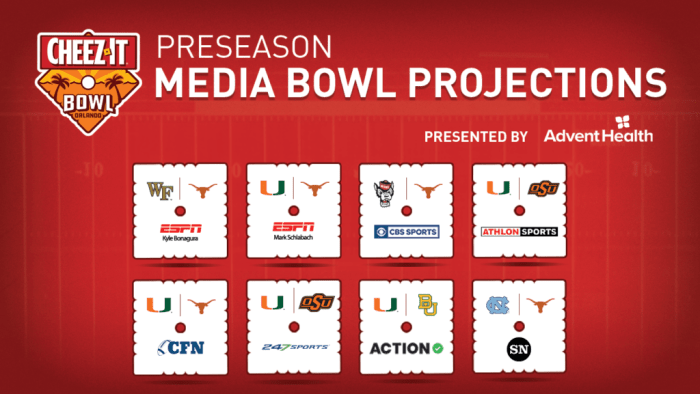
Predictive analytics play a crucial role in creating accurate bowl projections in college football. By utilizing statistical modeling and data analysis, sports analysts can make informed predictions about which teams will be selected for specific bowl games based on various factors.
Data Sources and Variables Considered
When it comes to statistical modeling for bowl projections, analysts consider a wide range of data sources and variables. These may include team performance metrics such as win-loss records, strength of schedule, offensive and defensive rankings, injuries, and historical performance in bowl games.
Additionally, factors like player matchups, coaching strategies, and even weather conditions can be taken into account to enhance the accuracy of the predictions.
Accuracy of Predictive Analytics vs. Traditional Methods
In comparing the accuracy of predictive analytics with traditional methods of forecasting bowl game matchups, it is evident that predictive analytics provide a more data-driven and objective approach. Traditional methods often rely on subjective opinions, human biases, and historical trends without considering the full scope of available data.
Predictive analytics, on the other hand, leverage advanced algorithms and statistical models to process vast amounts of data and generate more precise predictions. This results in more reliable and consistent bowl projections that take into consideration a broader array of factors, ultimately leading to a higher level of accuracy in forecasting the outcomes of college football bowl games.
Impact of Injuries and Player Performance
In college football bowl projections, injuries and player performance statistics play a crucial role in determining outcomes. Let's delve into how these factors influence bowl projections and how statistical modeling adjusts for unexpected variables.
Influence of Injuries on Bowl Projections
Injuries to key players can significantly alter the dynamics of a team and impact their performance on the field. For example, if a star quarterback gets injured before a bowl game, it can drastically change the team's offensive strategy and overall chances of winning.
Statistical models need to account for these unforeseen events by adjusting projections based on historical data and the impact of similar injuries in the past.
Player Performance Statistics in Bowl Projections
Player performance statistics, such as passing yards, rushing touchdowns, and defensive tackles, are key indicators used in bowl projections. A standout performance by a player in a crucial game can shift the odds in favor of their team for a bowl bid.
Statistical modeling analyzes these performance metrics to predict future outcomes and determine which teams are likely to excel in bowl games.
Adjustments for Unexpected Factors
Statistical modeling in bowl projections incorporates adjustments for unexpected variables like injuries through data analysis and predictive analytics. By evaluating the historical performance of teams in similar situations, models can account for the impact of injuries on player availability and performance.
These adjustments help refine bowl projections and provide more accurate predictions for upcoming games.
Closing Notes
Concluding our discussion, this section encapsulates the essence of Bowl Projections and Statistical Modeling, leaving readers with a memorable and thought-provoking conclusion.
Query Resolution
How are teams selected for bowl games?
Teams are typically chosen based on their performance throughout the season, conference tie-ins, and selection committee decisions.
What key metrics are used in statistical modeling for sports predictions?
Metrics such as player performance statistics, team records, strength of schedule, and various advanced analytics play crucial roles in statistical modeling.
How does statistical modeling adjust for unexpected factors like injuries?
Statistical models often incorporate historical data on how injuries impact game outcomes to adjust predictions accordingly.